Color Me Chic

Master color and transform your wardrobe

Bold Color Combinations That Turn Heads

2026-07-12

Quick Answer: The most reliable bold color combinations are complementary pairs worn 70/30 — one color dominant, one as accent. Cobalt and orange, pink and green, purple and yellow all work this way. If full color-on-color feels like too much, pair one bright with a neutral (hot pink with black, emerald with cream) for the same impact at half the nerve.

Your closet has quietly gone beige. Not on purpose — it just happened, one safe purchase at a time, and now getting dressed is a decision between three shades of oatmeal.

The fastest fix isn’t a new silhouette or a bigger budget. It’s two colors that shouldn’t work together and absolutely do.

Bold Color Combinations That Turn Heads

At a glance

What Are the Best Bold Color Combinations?

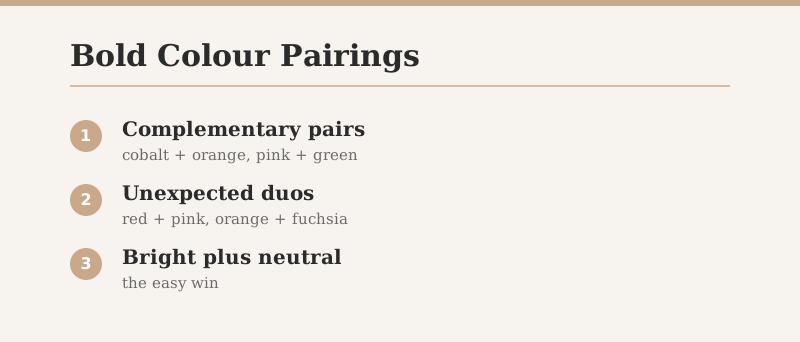
Start with complementary pairs — colors sitting opposite each other on the color wheel. Cobalt and orange. Pink and green. Purple and yellow. These create the most visual energy of any pairing, because each color makes the other look more saturated.

The trick that separates striking from clashing is ratio. Keep one color dominant and the other as an accent, roughly 70/30. A cobalt dress with an orange bag is bold and balanced. A cobalt dress with orange shoes, an orange bag, and an orange jacket is a traffic cone.

Complementary pairs are the highest-impact way into bold color, and the ratio rule is what makes them wearable on an ordinary Wednesday rather than only at a wedding.

The same 70/30 logic works in activewear, where color pairings are easier to test cheaply — a pair of high waist yoga pants in a deep base color with a single bright top lets you try a combination before you commit to it in tailoring.

Which Unexpected Color Pairings Actually Work?

The ones that break the old rules read as the most modern.

Red and pink. Once labeled a faux pas, now one of the chicest combinations going. Works best when both are saturated — bright red with hot pink, not brick with dusty rose.

Orange and fuchsia. Loud, joyful, and surprisingly flattering on most skin tones. Keep the rest of the outfit quiet.

Green and blue. Emerald with cobalt, sage with navy, lime with teal. Nature does this constantly, which is why it looks right even though color theory says it shouldn’t.

Purple and red. Deep, rich, slightly unexpected. A plum coat over a red dress is one of those combinations people remember.

Yellow and lavender. Soft on paper, striking in practice. The warm-cool tension is what makes it interesting.

Rule of thumb: reach for the pairing that makes you slightly nervous. That’s almost always the one that turns heads. The safe pairing is safe precisely because nobody notices it.

Styling flat lay

Myth vs Fact: Bold Color

Myth: Bright colors only suit certain skin tones. Fact: Every skin tone suits some version of every color. Cool complexions want blue-based brights (fuchsia, cobalt, emerald); warm ones want yellow-based brights (coral, marigold, lime). The color isn’t wrong, the undertone is.

Myth: You need to be tall or thin to wear bold color. Fact: Color has nothing to do with proportion. What people are actually reacting to is contrast — and you control that with where you place the bright, not whether you wear it.

Myth: Bold color is unprofessional. Fact: A cobalt blazer over black trousers is more professional than a wrinkled beige suit. Structure signals professionalism; color doesn’t.

Myth: Bold combinations require expensive clothes. Fact: Color is the one style upgrade that costs the same as its absence. A £25 bright knit reads as more considered than a £250 grey one.

Myth: You should stick to one bold color per outfit. Fact: This is the beginner’s rule, and it’s a good one for about a month. After that it’s just a way to stay beige with extra steps.

How Do You Wear Bold Color If You’re Nervous?

Start with bright plus neutral. One vivid color anchored by black, grey, cream, navy, or camel.

Hot pink with black. Cobalt with grey. Emerald with cream. Marigold with navy. The neutral grounds the brightness and keeps the outfit wearable while still delivering real impact — nobody’s going to miss the pink.

This is the foolproof entry point, and honestly, it’s chic enough to be a destination rather than a stepping stone. Plenty of extremely well-dressed people never move past it.

If you want a slightly bolder version: keep the neutral base but make the bright piece bigger. A hot pink coat over an all-black outfit is a bright-plus-neutral look, technically. It also stops traffic.

Deeper dive

How Do You Make a Bold Outfit Look Deliberate?

Three things, and they’re all about commitment.

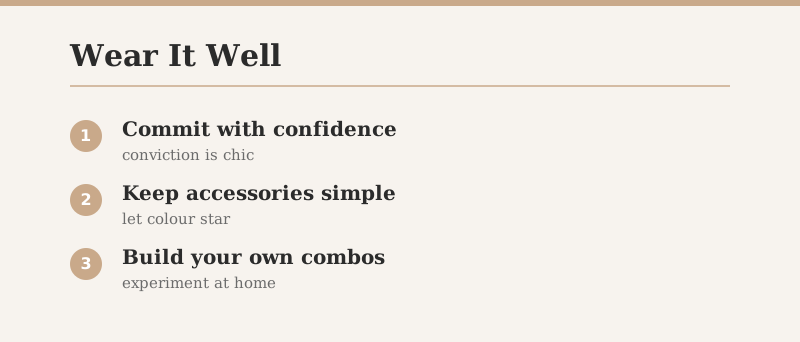
Wear it with conviction. A bold duo worn hesitantly reads as uncertain; the identical duo worn with confidence reads as deeply chic. Nobody can tell whether you planned the outfit or panicked into it — except by how you carry it.

Keep accessories simple. Let the colors be the whole statement. Neutral shoes, a plain bag, minimal jewelry. Adding a third loud element is how a striking outfit becomes a busy one.

Repeat the accent once. If your accent color appears in exactly two places — say, an orange bag and an orange earring — the outfit reads as designed rather than accidental. Two placements, not three.

Point detail

How Do You Find Your Own Color Combinations?

Experiment with what you already own, which costs nothing and takes about ten minutes.

Pull out pieces in colors you’d never normally put together and physically hold them side by side. You’ll find two or three duos you love almost immediately — and you’ll also discover which brights your wardrobe is secretly missing, which makes your next shopping trip far more efficient.

Build a small mental library of your favorite pairings. Three or four go-to combinations mean you always have a striking, joyful outfit ready without any decision-making at 7am.

Frequently Asked Questions

How many bold colors can you wear at once?

Two is the sweet spot, three is advanced, four is a costume. If you want a third color in the outfit, make it a neutral — black, cream, or denim — so it functions as a rest rather than another competing voice.

What’s the easiest bold combination for beginners?

Cobalt blue and camel. Both are widely flattering, the contrast is strong enough to notice but soft enough to feel wearable, and most people already own a camel coat or bag to build around. Emerald and cream is a close second.

Do bold color combinations work in winter?

Yes, and they’re arguably more valuable then — a bright combination against grey weather has more impact than the same pairing in July. Winter fabrics like wool and cashmere hold saturated color beautifully, and a bold coat is the single highest-mileage bright piece you can own.


TL;DR:

  • Complementary pairs (cobalt/orange, pink/green, purple/yellow) deliver the most impact
  • Use a 70/30 ratio — one color dominant, one as accent — to stay striking instead of clashing
  • Rule-breaking duos read most modern: red with pink, orange with fuchsia, green with blue
  • Nervous? Start with one bright plus a neutral; it’s a legitimate destination, not just a first step
  • Keep accessories simple and repeat your accent color exactly twice
  • Test pairings with clothes you already own before buying anything new

The beige can wait. The head-turning combinations are considerably more fun.

Keep Reading

This article is for general styling and informational purposes only. Trends, sizing, availability and pricing may vary by brand and season.

← All articles